

Introduction
Virtual Reality (VR) is no longer just a futuristic concept seen in movies or gaming. It has evolved into a practical tool revolutionizing workplace training across industries. Companies today face challenges in efficiently training employees while maintaining safety, reducing costs, and enhancing learning outcomes. VR offers a dynamic solution by creating immersive environments that simulate real-world scenarios. Unlike traditional training methods, VR provides an experiential learning approach. Employees can practice skills in a risk-free virtual environment, allowing them to learn faster and retain knowledge longer. From onboarding new staff to specialized technical training, VR is reshaping the way organizations build workforce competency.
Understanding VR in Workplace Training
What is VR in Training?
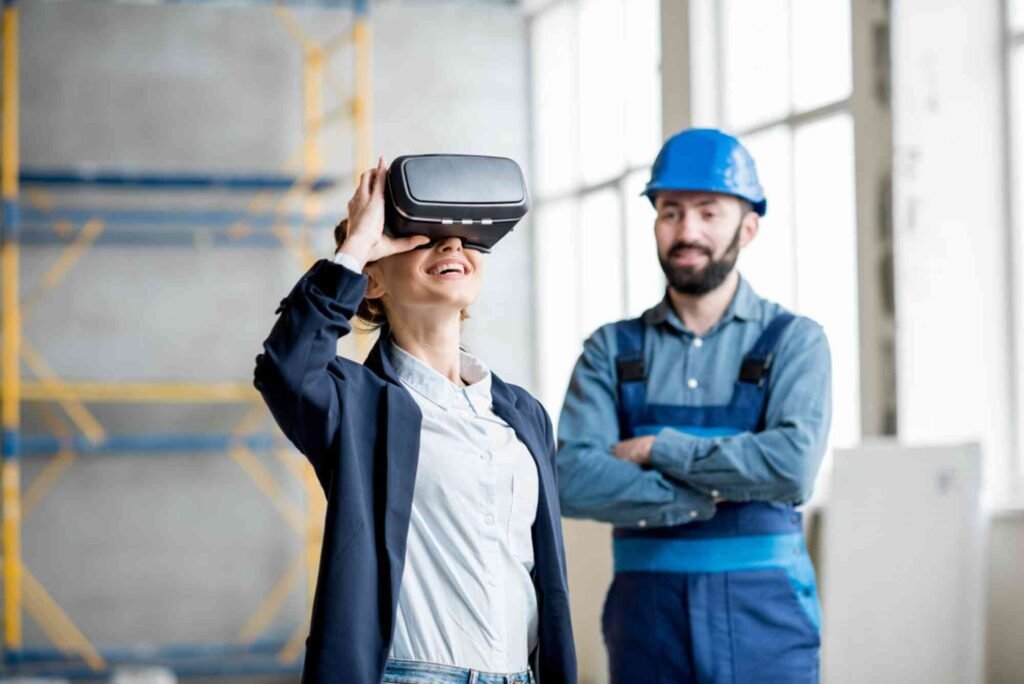
Virtual Reality training uses computer-generated simulations to recreate real-world work environments. Employees wear VR headsets to engage in interactive tasks, from machinery operation to customer service scenarios. This method allows learners to experience realistic situations without facing physical risks.
Why Businesses Are Adopting VR
Companies are investing in VR because it addresses common training challenges. Traditional classroom training or video tutorials often lack engagement, interactivity, and practical application. VR transforms passive learning into active participation, making employees more confident and prepared. Organizations also report reduced training costs and minimized workplace accidents when using VR solutions.
Key Benefits of VR in Workplace Training
Enhanced Learning Retention
One of the most significant advantages of VR training is improved knowledge retention. Research indicates that immersive experiences increase memory recall and skill application. Employees who train in VR environments can remember procedures and safety protocols more effectively than through standard lectures.
Safe Simulation of Risky Scenarios
Workplace safety is a priority, especially in industries like manufacturing, construction, and healthcare. VR enables employees to practice handling dangerous situations, such as chemical spills, machinery malfunctions, or emergency evacuations, without any real-world hazards.
Cost Efficiency Over Time
While initial VR setup costs may seem high, long-term benefits outweigh them. Traditional training often requires travel, instructors, and downtime. VR eliminates these costs while providing scalable solutions for multiple employees simultaneously. Companies also save on material and equipment wear-and-tear.

Personalized and Adaptive Learning
VR platforms can track learner progress and adapt scenarios to individual needs. Employees receive immediate feedback, allowing them to correct mistakes and improve performance in real-time. Personalized VR training enhances competency and ensures employees are job-ready more quickly.
Increased Engagement and Motivation
Unlike conventional methods, VR captures attention and encourages active participation. Employees feel more motivated to complete tasks because the training experience feels interactive and game-like, reducing boredom and improving learning outcomes.
Applications of VR in Different Industries
Healthcare and Medical Training
Medical professionals use VR to practice surgeries, patient care, and emergency responses. Trainees can explore complex procedures step by step, making mistakes in a controlled environment without risking patient safety.
Manufacturing and Industrial Training
In industries with heavy machinery, VR allows operators to practice assembly lines, equipment handling, and safety protocols virtually. This reduces workplace accidents and increases operational efficiency.
Retail and Customer Service
VR can simulate customer interactions, enabling staff to handle complaints, upsell products, and improve communication skills. Training employees in virtual stores prepares them for real-life situations without disrupting actual operations.
Corporate Onboarding and Soft Skills
Organizations use VR for onboarding new hires and teaching soft skills such as leadership, negotiation, and teamwork. Interactive scenarios help employees understand company culture and decision-making processes.
Challenges and Considerations in VR Training
Despite its benefits, VR training has challenges. High upfront costs, technical requirements, and employee adaptation can be barriers. Not all employees are comfortable using VR, and some may experience motion sickness. Organizations must carefully evaluate VR providers, invest in staff orientation, and ensure content aligns with real-world tasks.
Integration with existing learning management systems is also crucial. VR should complement traditional training methods rather than replace them entirely. Blending VR with workshops, mentoring, and e-learning modules creates a holistic approach that maximizes learning outcomes.
Future of VR in Workplace Training
The future of VR in training looks promising. Advancements in hardware, software, and AI are making VR experiences more realistic, affordable, and accessible. Augmented Reality (AR) and Mixed Reality (MR) integration will further enhance training by combining virtual simulations with real-world environments.
Companies will increasingly adopt VR for remote workforce training, reducing geographical barriers. Employees in different locations can participate in standardized VR modules, ensuring consistent learning experiences across global teams.
Data analytics will play a major role in the future of VR training. Organizations can track performance, engagement, and knowledge retention, enabling continuous improvement in training programs. This data-driven approach ensures employees are better prepared for their roles, improving overall business efficiency.
Top Tech Trends Shaping the Future in 2025: In 2025, emerging technologies like AI, VR, blockchain, and quantum computing are set to transform industries. Automation and smart systems will enhance efficiency, while innovations in green tech and IoT will redefine sustainability and connectivity, shaping a smarter, more connected future.
Embracing VR for Smarter Training
Virtual Reality is transforming workplace training by creating immersive, interactive, and safe learning experiences. From improving retention and engagement to reducing costs and enhancing safety, VR offers tangible benefits for employees and organizations alike.
Businesses willing to invest in VR training gain a competitive edge, as their workforce becomes more skilled, adaptable, and confident. Embracing VR is not just a technological upgrade—it is a strategic move to future-proof employee development and operational efficiency. Ready to transform your workplace training? Explore VR solutions tailored to your industry and empower your team with the skills needed for tomorrow’s challenges.
FAQs
How does VR improve employee training?
VR improves training by offering immersive experiences, allowing employees to practice skills safely, and enhancing knowledge retention.
Is VR training suitable for all industries?
While VR is highly effective in healthcare, manufacturing, and corporate sectors, it is adaptable to most industries depending on training needs.
What are the costs associated with VR training?
Costs vary by hardware, software, and content development. While initial investment is high, long-term benefits include reduced travel, materials, and operational downtime.
Can VR replace traditional training methods?
VR is best used alongside traditional methods. Blending VR with workshops, e-learning, and mentoring ensures comprehensive learning experiences.
Does VR training cause motion sickness?
Some users may experience discomfort initially, but proper setup, breaks, and gradual exposure reduce motion sickness significantly.
How do companies measure VR training effectiveness?
Analytics and performance tracking within VR platforms help measure engagement, skill improvement, and retention, allowing organizations to optimize training programs.
Transforming Industrial Paradigms
Over the past decade, rapid technological maturation has dismantled traditional boundaries. Industry pioneers are prioritizing sustainable materials, optical network efficiency, and adaptive user interfaces.

Modernist architectural integration exemplifying passive solar cooling and sustainable timber frame structures.
The Horizon Ahead
As we look forward to the remainder of 2026, the convergence of artificial intelligence, high-efficiency energy systems, and refined physical design promises to elevate human potential to unprecedented heights.