

Introduction
In the modern world, technology is no longer just a tool; it has become the backbone of education. From elementary schools to universities, the integration of digital tools is redefining how students learn, teachers instruct, and institutions operate. The evolution of technology in education has created opportunities for personalized learning, enhanced engagement, and global connectivity. Understanding how technology is transforming education is vital for educators, students, and policymakers striving to build a smarter future.
The Rise of Digital Learning Platforms
Digital learning platforms have revolutionized the traditional classroom. Platforms like Khan Academy, Coursera, and Udemy allow students to access high-quality educational resources from anywhere in the world. These platforms offer interactive lessons, video tutorials, and real-time assessments, making learning more flexible and efficient. Unlike traditional classrooms, students can learn at their own pace, revisit complex topics, and gain certifications that are recognized globally.
The convenience of digital platforms has also expanded learning opportunities for adult learners. Professionals can upskill or reskill without interrupting their careers. This flexibility ensures that education is no longer confined to specific ages or locations, fostering lifelong learning habits.
Artificial Intelligence in Education
Artificial intelligence (AI) is playing a pivotal role in transforming educational experiences. AI-powered tools can analyze student performance, predict learning gaps, and provide personalized recommendations. For example, intelligent tutoring systems can identify areas where a student struggles and deliver targeted lessons to address weaknesses.
AI is also reshaping administrative processes. Automating grading, scheduling, and performance tracking saves teachers valuable time, allowing them to focus on fostering creativity and critical thinking. Moreover, AI-driven chatbots provide instant academic support, answering questions, and guiding students through complex concepts at any time.
Virtual and Augmented Reality for Immersive Learning
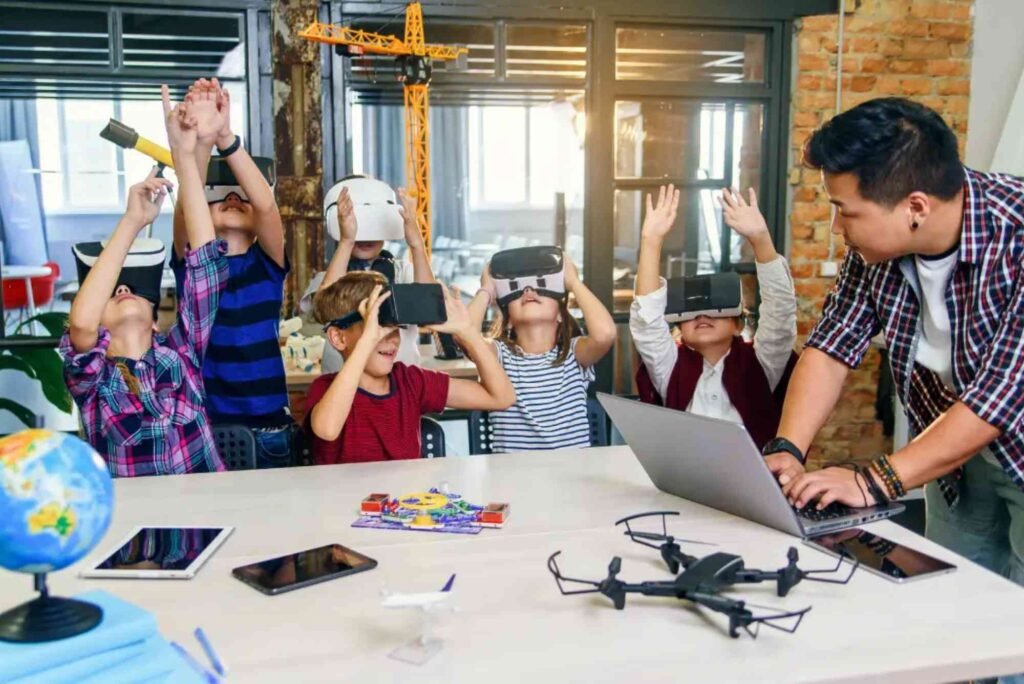
Virtual reality (VR) and augmented reality (AR) are transforming how students experience education. VR allows learners to explore historical sites, conduct virtual science experiments, or simulate complex machinery without leaving the classroom. This immersive experience makes learning more engaging and helps students retain information more effectively.

AR enhances textbooks and classroom activities by overlaying digital information onto the real world. Students can interact with 3D models, visualize abstract concepts, and gain a deeper understanding of subjects like biology, chemistry, and physics. These technologies bridge the gap between theory and practical application, making learning more interactive and enjoyable.
Gamification and Interactive Learning
Gamification is another approach driving technology’s impact on education. By integrating game-like elements such as points, levels, and challenges into lessons, educators make learning more motivating and competitive in a healthy way. Platforms like Duolingo and Quizlet use gamification to teach languages and other skills effectively.
Interactive learning tools encourage students to collaborate, solve problems, and think critically. Instead of passively absorbing information, learners actively engage with content, resulting in higher retention and improved problem-solving abilities. Technology has made gamification accessible to classrooms of all sizes and grade levels.
Cloud-Based Collaboration and Communication
Cloud technology has transformed how educators, students, and parents communicate. Tools like Google Classroom, Microsoft Teams, and Zoom enable seamless collaboration regardless of geographic location. Teachers can share assignments, conduct live sessions, and provide instant feedback online.
Students benefit from collaborative workspaces where they can contribute to group projects in real time. Cloud-based storage ensures that educational materials are accessible anytime, promoting consistent learning. This level of connectivity also strengthens teacher-parent communication, enabling more effective support for student development.
Data-Driven Insights for Personalized Learning
Technology empowers educators to make data-driven decisions that enhance learning outcomes. Learning management systems (LMS) collect data on student performance, attendance, and engagement. Analyzing this data helps identify patterns, measure effectiveness, and design strategies tailored to each student.
Personalized learning ensures that students receive instruction suited to their unique strengths and weaknesses. Instead of a one-size-fits-all approach, educators can provide individualized support, making learning more efficient and meaningful. As a result, students feel motivated and achieve better results.
The Role of Mobile Learning
Mobile devices have made education more accessible than ever. Smartphones and tablets allow students to study anywhere, anytime. Educational apps offer interactive lessons, quizzes, and instant feedback, enabling continuous learning beyond the classroom.
Mobile learning also supports microlearning, which breaks down lessons into small, digestible segments. This approach suits modern learners who prefer short, focused study sessions. Additionally, mobile technology facilitates real-time communication with teachers and peers, strengthening the learning ecosystem.
Bridging the Global Learning Gap
One of the most significant impacts of technology in education is its ability to bridge global disparities. Students in remote or underprivileged areas can access quality educational content online. Internet-enabled schools and community learning centers provide digital resources and virtual classrooms, leveling the playing field for all learners.
Furthermore, technology enables cross-cultural learning experiences. Students can participate in global projects, interact with peers worldwide, and gain exposure to diverse perspectives. This not only enhances knowledge but also cultivates empathy and intercultural communication skills.
Challenges and Considerations
While technology offers numerous advantages, it also presents challenges. Digital inequality, cybersecurity concerns, and screen-time management are critical issues that educators and policymakers must address. Ensuring that all students have access to devices and reliable internet is crucial to avoid widening educational gaps.
Teacher training is equally important. Educators must learn to integrate technology effectively into lessons without compromising critical thinking or creativity. Balancing traditional teaching methods with digital tools ensures that students receive a holistic education.
Future Trends in Educational Technology
The future of education will be increasingly shaped by technology. AI-driven adaptive learning systems, VR classrooms, and blockchain-based credentialing are just the beginning. Predictive analytics will help anticipate student needs, while immersive simulations will prepare learners for real-world challenges.
Edtech startups will continue to innovate, making learning more interactive, efficient, and accessible. As technology evolves, education will become more inclusive, personalized, and skill-focused, preparing students for an increasingly digital workforce.
Technology is undeniably transforming education by making learning more accessible, engaging, and personalized. From AI tools and virtual reality to cloud collaboration and mobile learning, students and educators now have unprecedented opportunities to enhance knowledge and skills. Embracing technology responsibly ensures a future where education is flexible, equitable, and effective for everyone.
Take the first step toward leveraging educational technology today. Explore digital learning platforms, integrate AI tools into your lessons, or encourage students to use interactive apps to unlock their full potential. The future of education is here, and it’s powered by technology.
FAQs
How is technology improving education for students?
Technology enhances education by providing interactive learning tools, personalized lessons, and global access to knowledge.
What are the benefits of virtual learning platforms?
Virtual learning platforms offer flexibility, self-paced learning, certification, and access to resources from anywhere in the world.
Can AI replace teachers in education?
No, AI supports teachers by automating tasks and personalizing lessons but cannot replace human guidance, creativity, and emotional support.
How does gamification impact student learning?
Gamification increases engagement, motivation, and retention by making learning interactive and rewarding.
What challenges does technology in education face?
Key challenges include digital inequality, cybersecurity concerns, screen-time management, and the need for proper teacher training.
How will education evolve with future technology?
Education will become more personalized, immersive, and skill-focused, with AI, VR, and data-driven systems leading the way.
Transforming Industrial Paradigms
Over the past decade, rapid technological maturation has dismantled traditional boundaries. Industry pioneers are prioritizing sustainable materials, optical network efficiency, and adaptive user interfaces.

Modernist architectural integration exemplifying passive solar cooling and sustainable timber frame structures.
The Horizon Ahead
As we look forward to the remainder of 2026, the convergence of artificial intelligence, high-efficiency energy systems, and refined physical design promises to elevate human potential to unprecedented heights.